
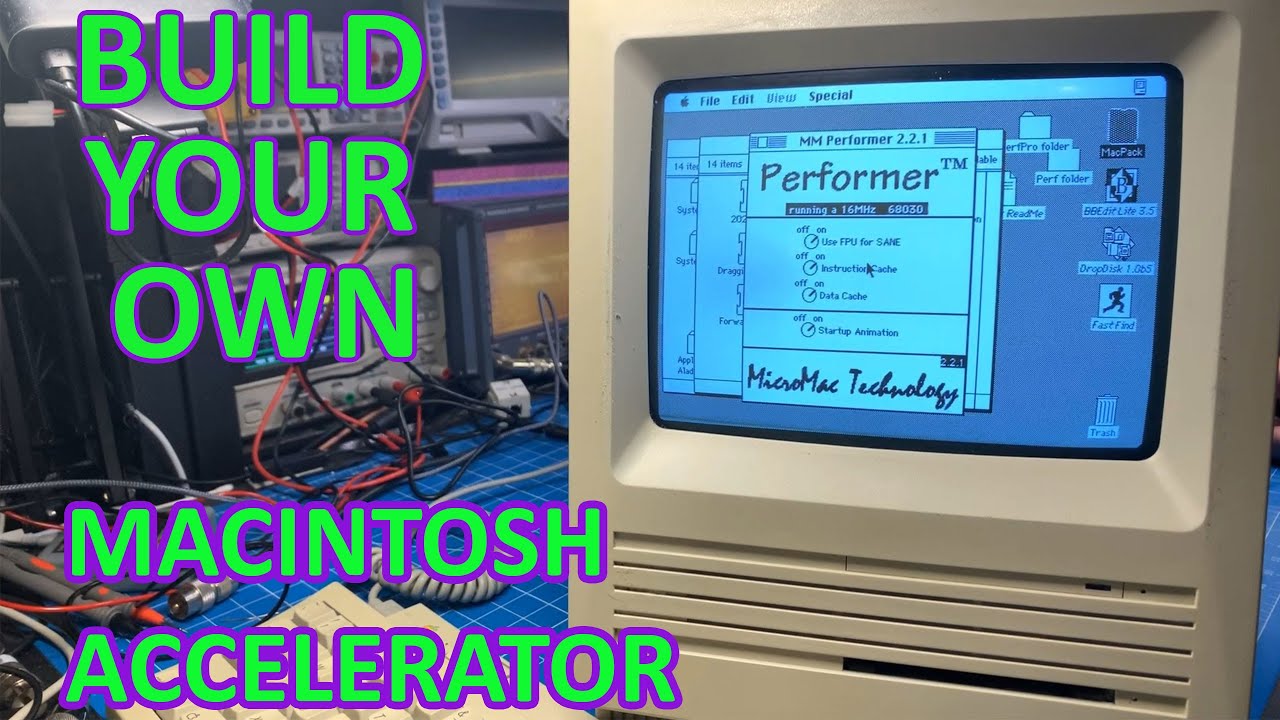
In a recent YouTube video, a tech enthusiast takes us through the process of building an accelerator board for classic Macintosh models, specifically the SE, Plus, and Classic. This project focuses on the Performer accelerator, which has been open-sourced by a well-known figure in the Macintosh community, Bull. With a rich history of creating various projects like the SE Reloaded and SE30 Reloaded boards, Bull has made it possible for hobbyists to access his designs on GitHub. While Mac Effects offers pre-built versions of this accelerator for $188 to $229 USD, the creator of the video decides to embark on a DIY journey, sourcing parts from platforms like AliExpress, eBay, and Digi-Key, ultimately aiming to build five units at a fraction of the cost.
The accelerator board is versatile, designed to fit into the PDS slot of an SE or to sit atop the existing CPU in any of the supported models. This flexibility allows users to enhance their vintage machines significantly, and the creator plans to test the accelerator in various Macintosh models, including the 512K. The project promises to be straightforward, although it requires a programmer for the GAL chips, which are critical for the board’s functionality. The speaker highlights a design quirk in the board that complicates troubleshooting: the GAL chips are not socketed, necessitating direct soldering—an unfamiliar territory for the creator.
One of the more innovative aspects of this project is the use of solder paste for attaching components. Despite initial challenges with the application and airflow, the creator manages to successfully solder passive components using this method. The learning curve becomes evident as they navigate through soldering techniques and component sizes, adapting as they go along. The speaker also mentions using through-hole tantalum capacitors instead of surface mount ones due to availability, emphasizing the project’s resourcefulness amid rising component prices.
As the build progresses, the speaker transitions to programming the GAL chips, an essential step for ensuring the board operates as intended. After programming each chip, they prepare for the final assembly, including installing a crystal filter to match the CPU and FPU speeds. They cleverly opt to use standard headers for the PDS slot instead of purchasing an expensive connector, further showcasing their DIY spirit and commitment to cost-saving measures.
Once assembled, the creator tests the accelerator in a Macintosh SE, navigating troubleshooting challenges to finally achieve success. They note that the accelerator runs the CPU at a locked speed of 16 MHz, even though the FPU can operate at a higher frequency. The performance boost is significant, bringing the Macintosh SE closer to the capabilities of the SE30. The video not only highlights the excitement of retro computing but also serves as a testament to the community’s dedication to preserving and enhancing vintage technology.
In conclusion, this project embodies the spirit of DIY innovation within the retro computing community. With the combination of open-source designs, resourceful sourcing, and a hands-on approach, the creator effectively demonstrates how to breathe new life into classic Macintosh computers. Viewers are left inspired and informed, eager to explore their own retro computing projects in the future.
Today I'm going to build some Accelerator boards that were open sourced by Bolle. It will work in the Macintosh Plus, SE, or Classic.
This is a clone of the Micromac Performer. You can build them yourself with the files at Bolle's Github: https://github.com/TheRealBolle/Performer-SE-PL-CL
Or you can buy them from Mac Effects pre made: https://maceffects.com/products/maceffects-performer-pds-68030-accelerator-for-apple-macintosh-se
Watch on YouTube: Build your own Accelerator for Macintosh SE, Plus or Classic
Subscribe: Click here